
Practical decision · US-FL-FLY-CAR-SEAT
Flying With a Car Seat Before a Florida Cruise: An Airport-to-Ship Checklist
Check aircraft approval, airline seating, baggage collection and the ground-vehicle handoff when flying with a car seat before a Florida cruise.
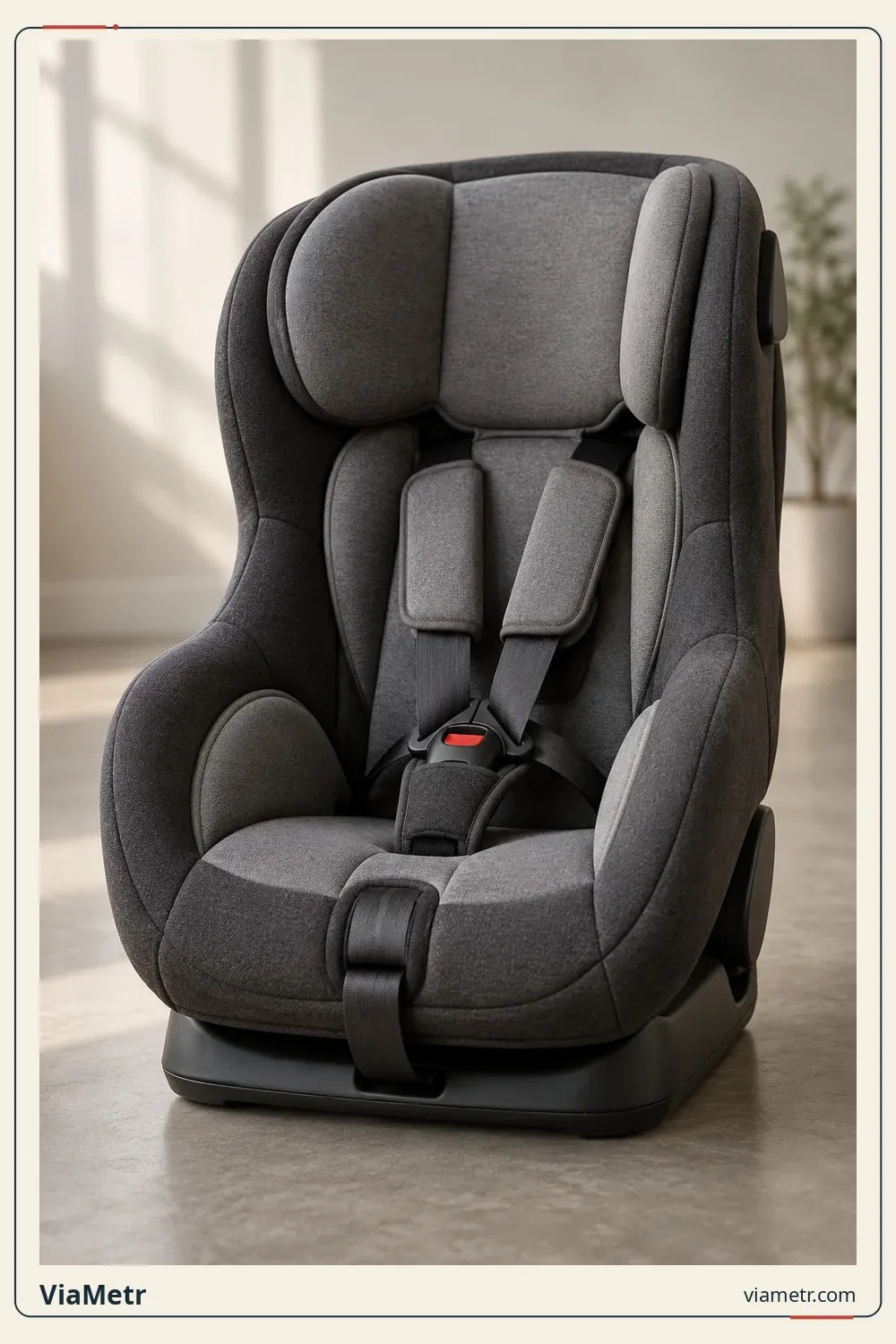
Plan the airplane seat and the Florida ground ride together. A seat accepted onboard still needs a compatible installation in the airport-to-hotel or airport-to-port vehicle. A seat checked as baggage will not be available for use during the flight—and you need to know where you will collect it before your ride starts.
Start with the seat’s approval label and manual, then check the operating airline’s rules for every flight segment. Finally, send your transfer operator the seat and luggage details. Do not let a generic “travel car seat” description stand in for those checks.
First decide: use it onboard, or transport it?
The FAA recommends an approved restraint in the child’s own airplane seat, rather than holding a child under two on your lap. Buy a ticket for the child if your plan depends on using the restraint; do not build the itinerary around an empty neighboring seat.
For a U.S.-standard car seat, look for the label “This restraint is certified for use in motor vehicles and aircraft.” FAA guidance also recognizes qualifying foreign-approved restraints with the required marking. Read the manual’s aircraft instructions; a road-use label alone is not enough.
This is not a car-seat shopping ranking. The right starting point is the device you have, its limits, and the child who will use it.
| Plan | What it solves | What remains unresolved |
|---|---|---|
| Use an aircraft-approved car seat in a purchased child seat | Gives the restraint a planned place during the flight | Aircraft fit, permitted seat location, carrying it through the airport, and vehicle installation |
| Check the car seat at the ticket counter | Lets you move through the terminal without carrying it | No onboard use; collection location and a backup if it does not arrive usable |
| Check it at the gate, if the airline permits | Keeps it with you until boarding | No onboard use once checked; do not assume plane-door return at the destination |
| Use an eligible CARES device in flight and arrange a road seat separately | Separates aircraft restraint from ground equipment | Two different restraint arrangements to confirm |
The FAA says CARES is for aircraft use, not motor vehicles. A booster is not an onboard substitute: FAA guidance prohibits booster use during taxi, takeoff and landing. Neither option removes the road-seat decision.
Check the airline, aircraft and seat assignment
Record the operating airline, flight number, cabin and assigned seats for each segment. Ask whether your exact restraint fits and is permitted in that location. Keep its dimensions and manual available when you contact the airline.
Two current airline examples show why this deserves its own check:
| Airline example, checked October 13, 2026 | Published restriction | Your booking task |
|---|---|---|
| American Airlines | No safety seat in an exit row or immediately ahead of or behind an overwing exit; window placement preferred. Some First/Business aircraft configurations do not permit safety seats. | Check the specific plane and cabin—not simply whether the ticket says “family seating.” |
| Southwest | No CRS in an aisle or exit-row seat, or in the row immediately ahead of or behind an emergency exit. Window placement preferred. | Review the assigned location and aircraft seat dimensions; the airline warns the aircraft can change. |
These are examples, not rules for every carrier. On a connecting itinerary, repeat the check for the second flight rather than assuming the first answer covers both.
The FAA requires installation according to the restraint manufacturer’s instructions, including the appropriate direction for the child’s size. Keep the aircraft-installation pages handy. Ask the crew if the seat assignment creates a problem; do not improvise an installation to preserve a preferred row.
Carrying and checking are different baggage plans
Write down what happens to both the stroller and car seat.
American currently permits one stroller and one car seat to be checked free per ticketed customer traveling with a child or to adopt. Its policy allows both at the counter, or one at the gate and one at the counter. That is not a promise that both items can stay with you until boarding.
Southwest’s infant-travel page allows an accompanying customer to check one stroller and one car seat/CRS per child free, with limited release of liability. Free checking does not establish the destination collection point or guarantee the item’s condition.
Before handing over the restraint, ask where it will be returned and how a connection affects it. Photograph its condition and labels for your own records, keep the baggage receipt, and carry the instructions you will need at the curb. Confirm the manufacturer’s packing and inspection guidance rather than treating a padded bag as a damage guarantee.
Leave a workable airport handoff
TSA screens car seats and boosters; equipment too large for the X-ray machine receives visual or physical inspection. Children must be removed from car seats for screening.
Decide who manages the child, who carries the restraint and who handles the other bags. If one adult is traveling alone, test whether that load is manageable before choosing a carry-through plan. This is a packing exercise, not a recommendation to change the child’s restraint just to save effort.
At arrival, keep the pickup request separate from scheduled landing. Collect the restraint, follow its inspection instructions and resolve any missing or damaged equipment before starting the vehicle ride. Your backup might be an operator-confirmed appropriate seat or a different compatible vehicle; it should not be “ride without it.”
The airplane approval does not confirm the transfer
Ask the ground operator whether your seat can be installed in the actual vehicle, who installs it, and how much luggage fits afterward. Ask what happens if the vehicle is substituted. Do not assume an aircraft installation method also applies to a van or motor coach.
For this leg, use the existing Florida cruise-transfer checklist for families. For route choices, see MCO to Port Canaveral or MIA to PortMiami.
An overnight stay creates another handoff: airport to hotel, then hotel to ship. Compare that structure with the day-before arrival guide. Do not stop checking after the first ride.
Save this airport-to-ship worksheet
- Child’s size is within the restraint manufacturer’s limits.
- Approval label photographed; manual and aircraft instructions available offline.
- Each operating airline, cabin and permitted seat location checked.
- Child’s ticket purchased if relying on onboard use.
- Carry/use/check plan recorded separately for car seat and stroller.
- Collection point and connection handling confirmed with the airline.
- Ground operator has seat model, party size and complete luggage inventory.
- Installation responsibility and vehicle-substitution plan recorded.
- Every hotel leg and the return airport ride included.
- Missing/damaged-seat alternative identified before travel.
Use the true trip cost calculator for actual airfare, seat-selection, hotel and transfer quotes. It cannot certify restraint fit or installation. Choose the complete plan you can carry out—not just the flight with the lowest headline fare.
Primary sources
- FAA: flying with child restraints
- American Airlines: traveling with children
- Southwest: accepted child restraint systems
- Southwest: infant travel and checked equipment
- TSA: traveling with children
Checked October 13, 2026. Recheck airline policy, aircraft, seating and vehicle details before travel. This checklist does not establish compliance for a particular road vehicle or replace the restraint manufacturer’s instructions.