
Practical decision · US-FL-ACCESSIBLE-TRANSFER
Accessible Airport-to-Cruise Transfers in Florida: Questions to Confirm Before Booking
Confirm mobility-device fit, boarding help, securement, luggage and every airport-to-cruise leg before booking an accessible Florida transfer.
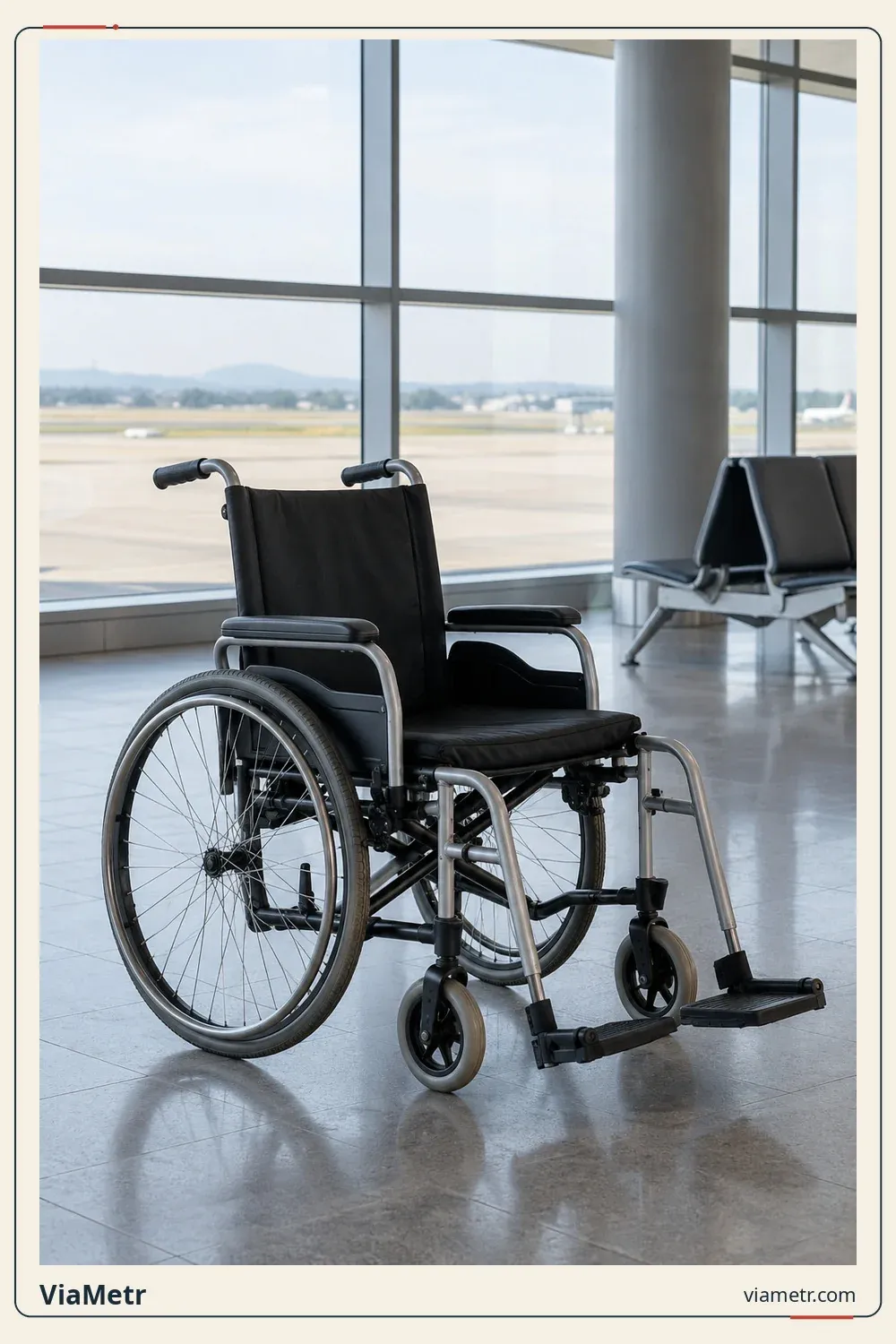
Book against what you and your mobility equipment need, not the word “accessible.” Before paying for a Florida airport-to-cruise transfer, confirm how you board, whether you remain in your wheelchair, how the equipment and passenger are secured, what help the driver provides, and whether your companions and bags fit in the same vehicle.
A website listing accessible transport establishes a service category. It does not confirm a vehicle for your date, your equipment or your cruise terminal. The useful result is a written booking that addresses those details.
Start with the boarding requirement
Describe the task without sending an unnecessary medical history. Can you transfer to a vehicle seat? Can you use steps? Do you need to remain in your wheelchair throughout the ride? Who can provide any personal assistance you need?
Do not assume a folding wheelchair means its user can climb into a shuttle. Likewise, a vehicle that can store a scooter may not provide a way for its user to board.
| Your requirement | Capability to request | An answer that is not enough |
|---|---|---|
| Remain seated in a wheelchair | Suitable ramp/lift, occupied-wheelchair space, and the operator’s securement and passenger-restraint arrangement | “We have a large van.” |
| Transfer to a vehicle seat but avoid steps | Confirmed boarding method, doorway and seat access, plus equipment storage | “The wheelchair folds.” |
| Use steps with personal assistance | Actual steps/handrails and a clear agreement about who helps | “The driver is helpful.” |
| Travel with a powered chair or scooter | Equipment dimensions and weight accepted; clarify occupied transport versus storage | “Mobility devices welcome.” |
| Travel with companions and cruise luggage | Confirmed wheelchair positions, passenger seats and bag space together | A passenger capacity that ignores the equipment |
This is a booking comparison, not a prescription for transferring or securing a particular chair. Use your equipment instructions and ask the operator how its vehicle accommodates them. If the operator cannot resolve a necessary capability, treat that option as unfinished.
Send an equipment brief before comparing quotes
Record the device make/model, width, length and height in the configuration used for travel. Include attachments that affect fit. State whether it folds or can be disassembled, and who can do that. Provide equipment weight and, when the operator needs it for occupied lift capacity, combined passenger-and-device weight.
Add the number of travelers, checked suitcases and carry-ons. Describe a second mobility device separately. Ask whether the quote keeps everyone together or requires another vehicle.
Then ask these specific questions:
- Will I board by ramp, lift or steps, and is that vehicle assigned to this reservation?
- Can I remain in my chair for boarding and the ride, if required?
- What are the relevant opening, platform, space and weight limits?
- How will you secure the equipment and provide the passenger restraint?
- Who assists with bags, loading equipment and personal boarding needs?
- If the vehicle changes, how will the confirmed capabilities be preserved?
Save the reply with the booking. A checkbox labeled “special requests” is not the same evidence as an operator accepting your dimensions and boarding requirement.
A Port Canaveral example: why the details matter
Go Port’s mobility-accommodation page describes lift-equipped service on selected routes at designated times. It requires booking at least four days before travel, followed by an email with the order number, device dimensions and combined passenger/device weight.
Its published lift limits are 30 inches wide by 48 inches long, with a 600-pound combined weight limit. These are this operator’s limits—not a Florida-wide standard.
The same page describes four or five entry steps on shuttles used without a lift and says staff cannot provide physical boarding assistance or lift passengers. Equipment storage and personal assistance are therefore separate questions.
Do not read this example as confirmation that a lift departure fits your flight. Ask for the actual service time, route, equipment acceptance and boarding arrangement. If the response is still pending, compare another fully specified option instead of calling the first one booked and suitable. We have not inspected or ridden these vehicles.
Match the airport pickup to the vehicle
MIA: Miami International Airport lists wheelchair-accessible taxis upon request and places taxi pickup outside baggage claim on the arrivals level. That confirms an available category, not a reserved cab or a maximum wait. Ask the dispatcher to confirm the equipment fit, party capacity and PortMiami destination before loading.
MCO: Orlando’s accessibility guidance directs travelers to alert both their airline and ground driver to wheelchair or skycap needs. It lists ground transportation on Level 1 for Terminals A/B and C. Confirm the particular meeting point and the accessible route to it; do not confuse airline assistance within the airport with your booked port ride.
FLL: FLL’s ground-transportation page places limousine, sedan and van pickups in designated lower-level arrivals areas and identifies ground-transportation information booths in baggage claim. Obtain instructions for your vehicle category and arrival terminal rather than borrowing another passenger’s rideshare meeting point. This page does not confirm a specific accessible cruise-transfer reservation.
FLL’s assistance page also lists wheelchair-accessible vans and recommends advance notice. Use that category as a starting point for a dispatch conversation, not as evidence that a van is already reserved for your arrival.
For the road itinerary, use MIA to PortMiami, FLL to Port Everglades or MCO to Port Canaveral. Add assistance and loading to your plan rather than treating a map’s drive time as the entire transfer.
Arrange the handoff at the cruise terminal
Give the operator the ship, sailing date and assigned terminal when available. Ask where it will unload and where you meet cruise-line assistance. Confirm who manages the bags while you complete that handoff.
PortMiami’s accessibility page describes wheelchair-accessible taxis and directs passengers to their cruise line for its accessible programs. Port facilities and a transport category do not establish that an attendant will be waiting at your drop-off. Arrange that separately with the cruise line.
If your terminal assignment changes, update the operator. For the return ride, ask how pickup is triggered after you leave the ship, where to wait and what happens if disembarkation takes longer than expected. A round-trip price should not hide a missing return meeting plan.
Compare an overnight plan without losing a leg
An overnight arrival may give you a more workable sequence, but it adds airport-to-hotel and hotel-to-port bookings. Confirm both with the same equipment brief. A hotel’s accessible room does not confirm its shuttle’s boarding arrangement.
Use the Port Canaveral hotel-shuttle checklist for the package questions and the post-cruise flight guide for return timing. Put actual whole-party hotel and transport quotes into the true trip cost calculator; it cannot certify vehicle suitability.
A shared shuttle is not a good fit if its confirmed departure or boarding help does not meet your needs. A private vehicle is not automatically suitable either. Choose between accepted capabilities and terms, not vehicle labels.
Before payment: the reservation acceptance checklist
- Airport, terminal, date, flight and cruise destination are recorded.
- Device dimensions and relevant weight limits are accepted in writing.
- Occupied-chair transport or transfer-to-seat requirement is explicit.
- Boarding method, securement and passenger restraint are explained.
- Personal assistance responsibilities are agreed; no assumed lifting help.
- Companions, bags and extra equipment fit the quoted arrangement.
- Pickup location and airport-to-driver handoff are clear.
- Hotel and return legs are confirmed separately where needed.
- Flight-delay, substitution, cancellation and no-show terms are saved.
- An alternative operator or revised itinerary is identified if the essential capability cannot be delivered.
If one essential answer is missing, keep that option marked unconfirmed. The aim is not to find the most reassuring description—it is to know how you will actually get from the airport to the ship.
Primary sources
- MIA: taxis and ride apps
- MCO: accessibility and ground-transport handoffs
- FLL: ground transportation and pickup categories
- FLL: assistance and wheelchair-accessible transport
- PortMiami: accessibility
- Go Port: mobility-device and lift-shuttle policy
Checked October 13, 2026. Reconfirm equipment limits, pickup instructions, service times and operator assistance before booking. No vehicle availability, journey time or individual reservation has been verified for your trip.